Modernising legacy business software without stopping the business
Big-bang rewrites are one of the riskiest projects a company can take on. Incremental modernisation lets you replace an ageing system piece by piece — while the business keeps running and value arrives early.
Most established businesses run on software that was right for its time and has quietly become a constraint. It works, mostly. But changes are slow, a handful of people understand it, integrations are fragile, and every new idea — a customer portal, a mobile app, an AI feature — runs into the same wall.
The tempting answer is to rebuild everything from scratch. It is also one of the riskiest projects a company can undertake: years of effort before any value, a moving target as the business keeps changing, and a cut-over day that everyone dreads. There is a better way.
Why big-bang rewrites fail
Full rewrites tend to struggle for predictable reasons:
- Hidden behaviour. Old systems encode years of business rules — many undocumented, some accidental, all relied on by someone.
- A moving target. The business doesn't stop while you rebuild; requirements change faster than the new system catches up.
- Value arrives last. Nothing improves for users until the very end, so momentum and budget erode.
- One risky moment. Switching everything at once concentrates all the risk into a single weekend.
Incremental modernisation addresses each of these by replacing the system in slices, each delivering value on its own.
Step 1: Understand what you actually have
Before deciding what to change, map the estate:
- Capabilities — what the system does for the business, in business terms (quoting, scheduling, invoicing, reporting).
- Pain — where changes are slowest, errors most common, or workarounds most frequent.
- Value — which capabilities differentiate you, and which are commodities.
- Dependencies — data flows, integrations, scheduled jobs and the people who rely on each.
This produces a simple but powerful picture: a list of capabilities, each with a pain score, a value score and its dependencies.
Step 2: Choose a strategy per capability
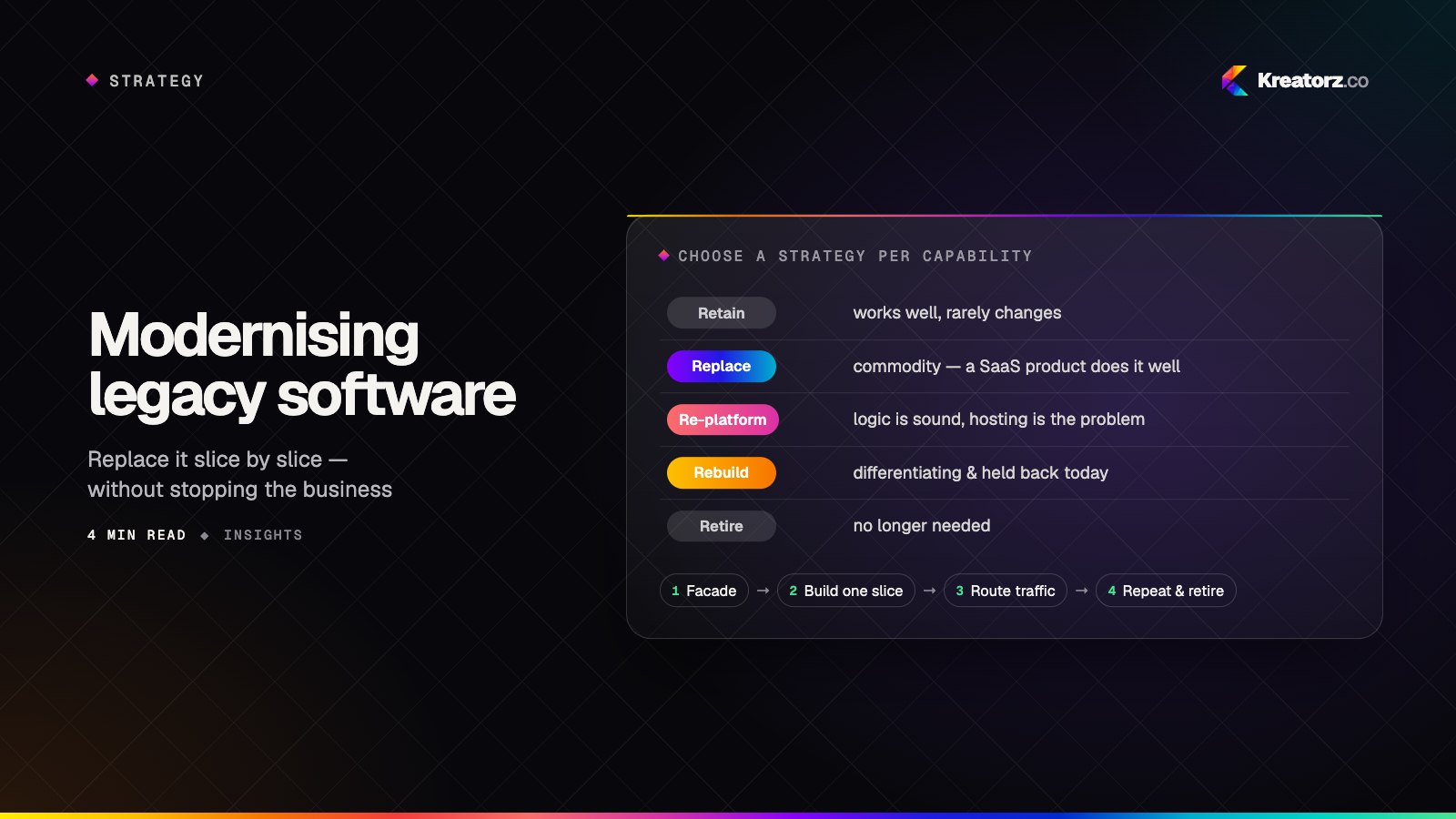
Not everything deserves the same treatment. For each capability, one of a few options usually fits:
| Strategy | When it fits |
|---|---|
| Retain | Works well, rarely changes, low risk — leave it alone for now |
| Replace with a product | Commodity capability (payroll, accounting) a good SaaS tool does well |
| Re-platform | Logic is sound, but hosting or infrastructure is the problem |
| Rebuild | Differentiating, high-change capability that the old system holds back |
| Retire | No longer needed — often more of these than expected |
Step 3: Replace piece by piece — the strangler fig
The strangler fig pattern is the workhorse of incremental modernisation. Named after a plant that grows around a tree until it can stand on its own, it works like this:
- Put a facade in front of the old system — an API layer or routing layer that all new requests pass through.
- Build one capability anew behind that facade, with modern architecture and tests.
- Route traffic for that capability to the new implementation, while everything else still goes to the old system.
- Repeat, capability by capability, until the old system handles nothing and can be switched off.
Each step is small, reversible and delivers improvement on its own. Users see progress in weeks, not years.
Step 4: Treat data as the hardest part
Code can be rewritten; data has to be carried across, intact, while the business keeps generating more of it.
- Profile the data early. Duplicates, inconsistent formats and missing values surface sooner or later — sooner is cheaper.
- Decide on the source of truth for each kind of data during the transition, and keep systems in sync deliberately.
- Migrate incrementally alongside each capability rather than in one massive move.
- Reconcile automatically — compare old and new outputs to prove the new system behaves correctly before switching.
Step 5: Integrate through clean interfaces
Modernisation is the moment to stop integrating through shared databases and file drops. Well-defined APIs and events between systems make each part replaceable later, and make it far easier to add new channels — mobile apps, partner portals, AI assistants — on top.
Where AI helps modernisation
AI has become genuinely useful in modernisation projects, as a tool for the team rather than a replacement for judgement:
- Understanding old code — summarising modules, tracing business rules and drafting documentation for systems nobody fully remembers.
- Generating tests that capture current behaviour before it is changed.
- Assisting translation of logic into modern languages (for example, ageing PHP into Laravel), with engineers reviewing every change.
- Data mapping and cleansing suggestions during migration.
Used this way, AI reduces the archaeology and lets engineers spend more time on design and verification.
Managing the change for people
Systems are replaced; habits are harder. Successful modernisation programmes:
- Involve the people who use the system daily from the start — they know the hidden rules.
- Release in small, visible improvements so trust builds with each step.
- Train and support around each change, not in one overwhelming session at the end.
- Measure outcomes people care about: fewer manual steps, faster turnaround, fewer errors.
A realistic roadmap
A typical programme shape looks like this:
- Assessment (2–4 weeks): map capabilities, pain, value and dependencies; agree the target architecture and the first slice.
- Foundation (4–6 weeks): set up the facade, delivery pipeline, monitoring and the first data synchronisation.
- First slice live: the highest-value, most-contained capability moves to the new platform.
- Iterate: continue slice by slice, retiring old components as you go, with the business running throughout.
The bottom line
Legacy systems rarely need to be replaced all at once — and they rarely should be. By mapping what you have, choosing the right strategy for each capability and replacing the system slice by slice, you reduce risk, deliver value early and keep the business moving the whole way through.
Living with a system that's holding the business back? Tell us about it — we'll help you find the first slice worth modernising.
Related services
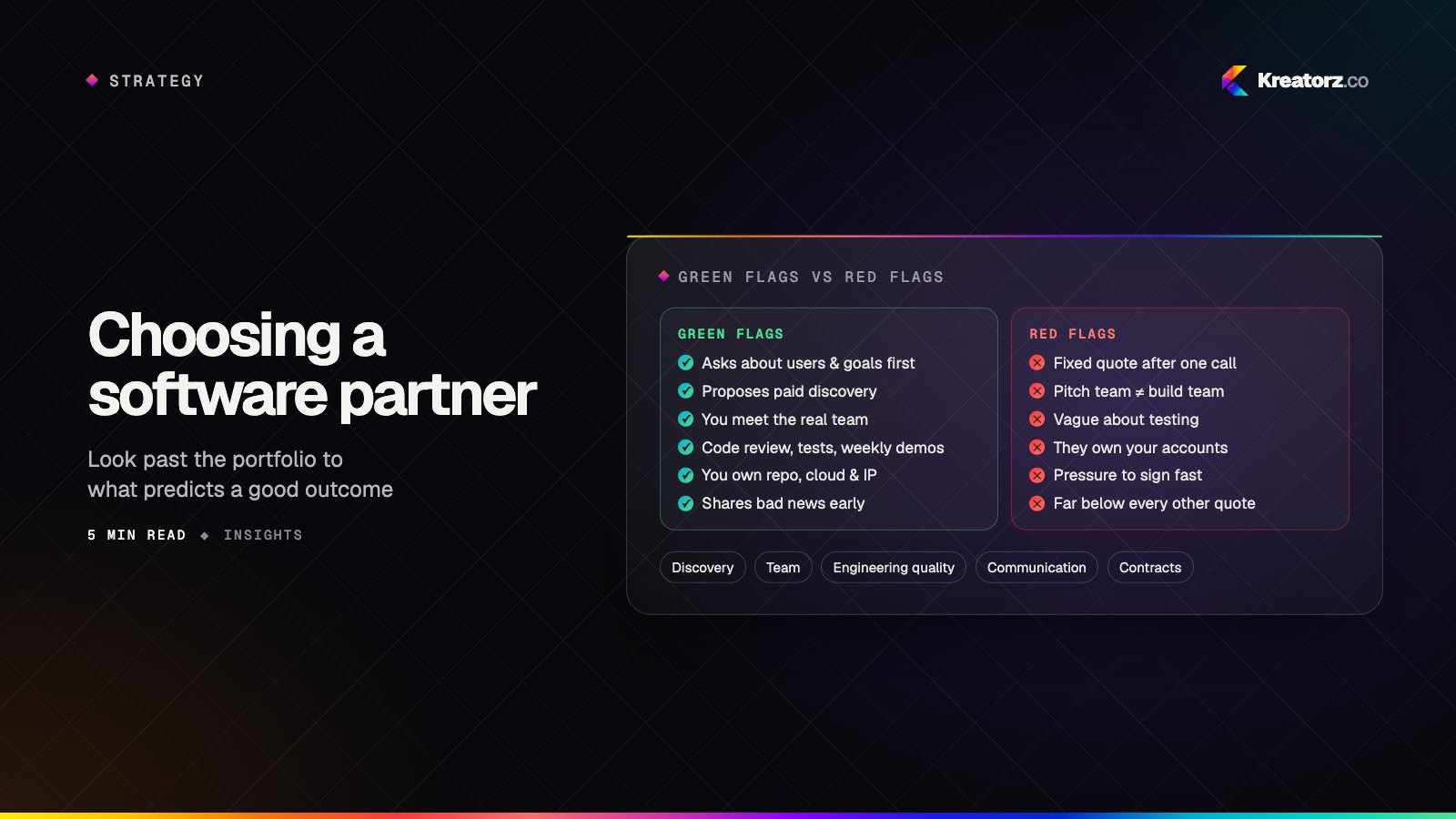
How to choose a software development partner: a buyer's guide
The partner you choose shapes your product more than any framework or tool. Here is how to evaluate agencies and studios on the things that actually predict a good outcome — and the red flags worth walking away from.
12 November 2026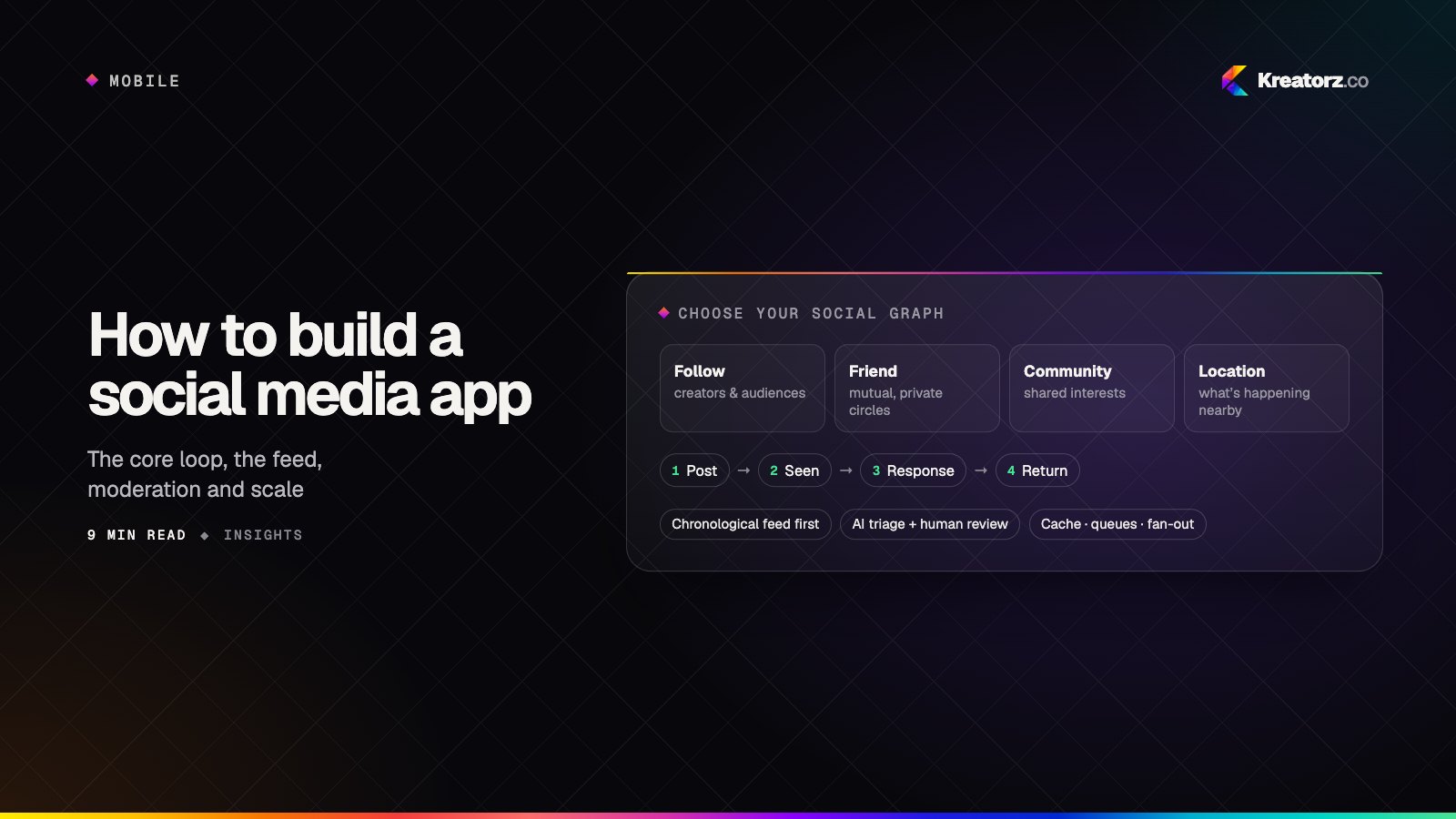
How to build a social media app: graph, feed, moderation and scale
A social app is a loop, not a feature list. This guide covers choosing your social graph, essential features, feed ranking, moderation, media, real-time infrastructure, scaling, safety and what to put in your first release.
15 November 2026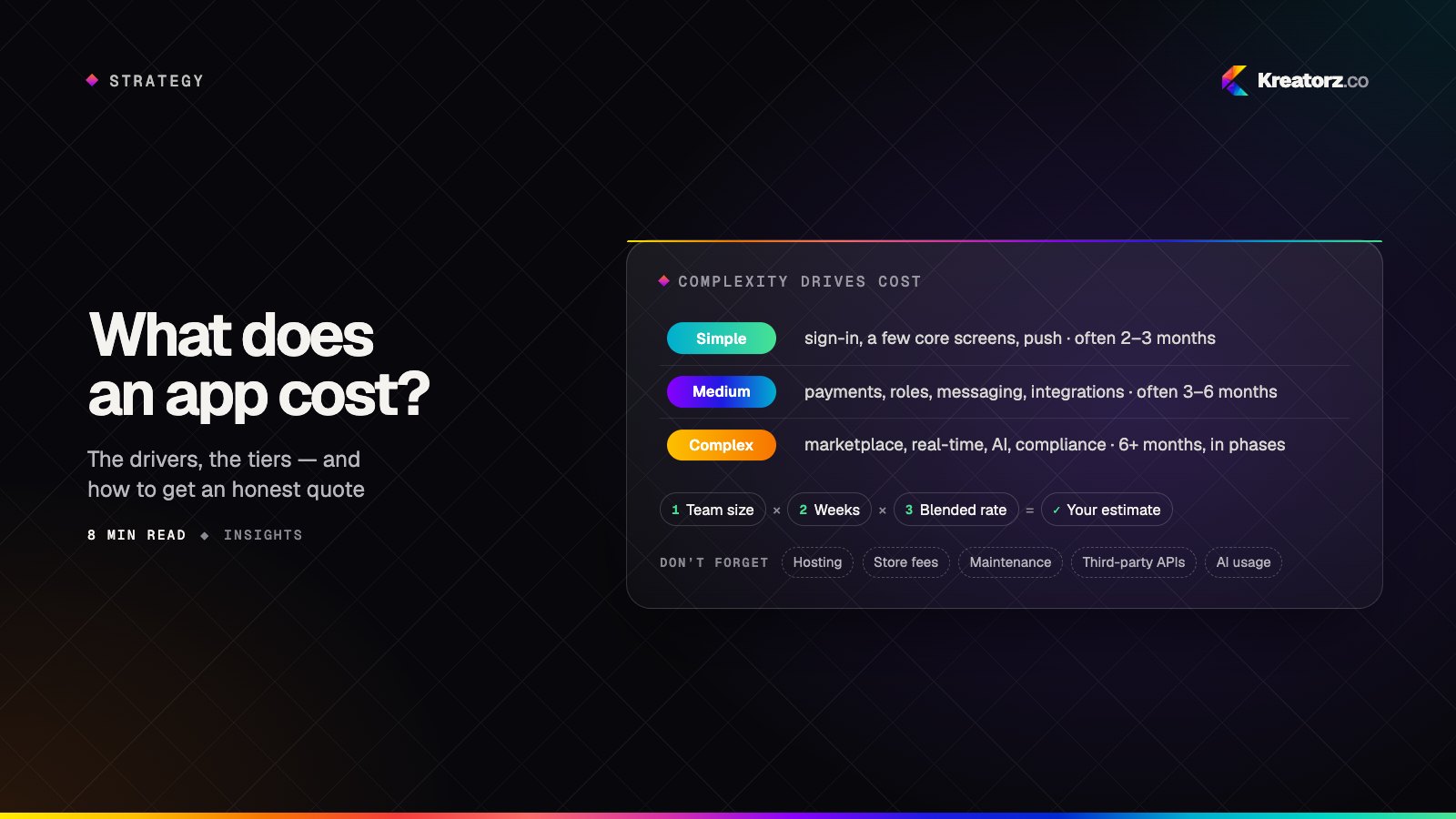
How much does it cost to build an app? A practical guide for 2026
There is no single price for an app, but there is a reliable way to reason about it. Here is what actually drives app development cost, how complexity tiers compare, how to estimate a budget yourself and how to reduce cost without cutting quality.
15 November 2026