Most web projects do not fail because of one bad line of code. They fail in the gaps — between the designer and the front-end developer, between the API team and the database, between the people who build the product and the people who deploy it. Kreatorz is a full stack development company that closes those gaps: one team owns the interface, the server, the data and the cloud, so decisions are made with the whole system in view.
We build custom web applications for startups launching a first product and for businesses replacing spreadsheets, ageing portals or disconnected tools. The technology is chosen for your product, not our habits.
What a full stack development company actually owns
"Full stack" is often used to mean a developer who can write a bit of everything. For us it means a team that takes responsibility for every layer of a running product:
- Interface. Responsive, accessible screens and design systems, built with React and Next.js and TypeScript.
- Application logic. APIs, background jobs, integrations and business rules, written in Node.js, Python or PHP with Laravel.
- Data. Schema design, migrations, indexing, search and reporting on PostgreSQL, MySQL, MongoDB or Firestore.
- Infrastructure. Hosting, environments, secrets, monitoring and backups — typically on AWS or Firebase.
- Delivery. CI/CD pipelines, automated tests, preview environments and safe releases.
- Security. Authentication, role-based access, input validation and dependency hygiene from the first sprint, not the last.
When one team owns all of that, a feature request becomes a single conversation rather than three tickets in three backlogs.
Full stack web development services
Custom web application development
Customer portals, booking systems, internal tools and multi-user platforms, built from discovery to launch. We model your real workflows first, because a schema that matches the business is far cheaper to extend.
SaaS platforms
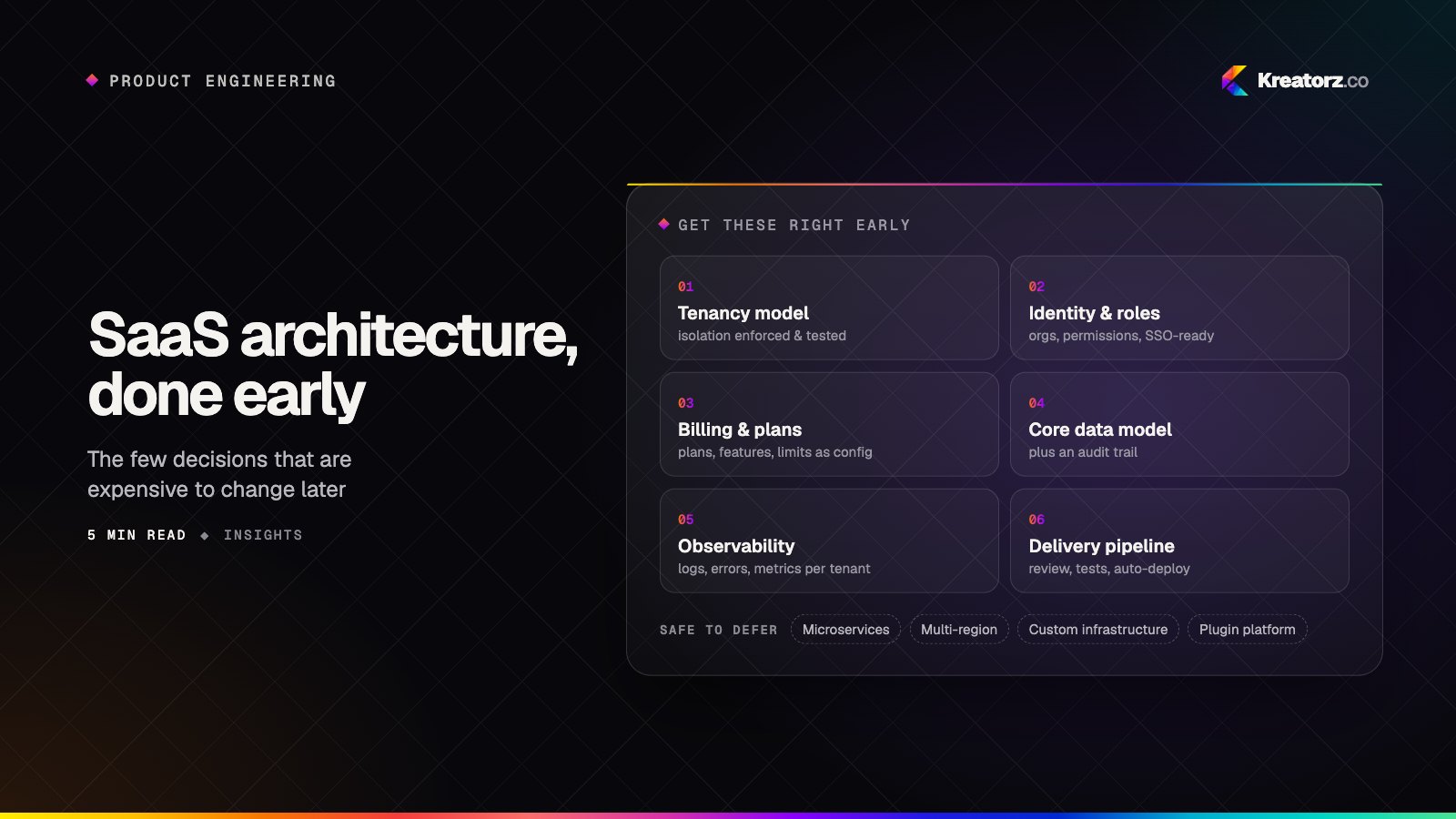
Multi-tenant architecture, subscription billing, onboarding, roles and admin consoles. If you are building a product to sell to many customers, our SaaS development page and the article on SaaS architecture decisions go deeper.
MVPs that can grow
A focused first release with production-grade foundations — authentication, logging, backups and a deployment pipeline — so that success does not force a rewrite. See MVP development.
Modernisation of existing systems
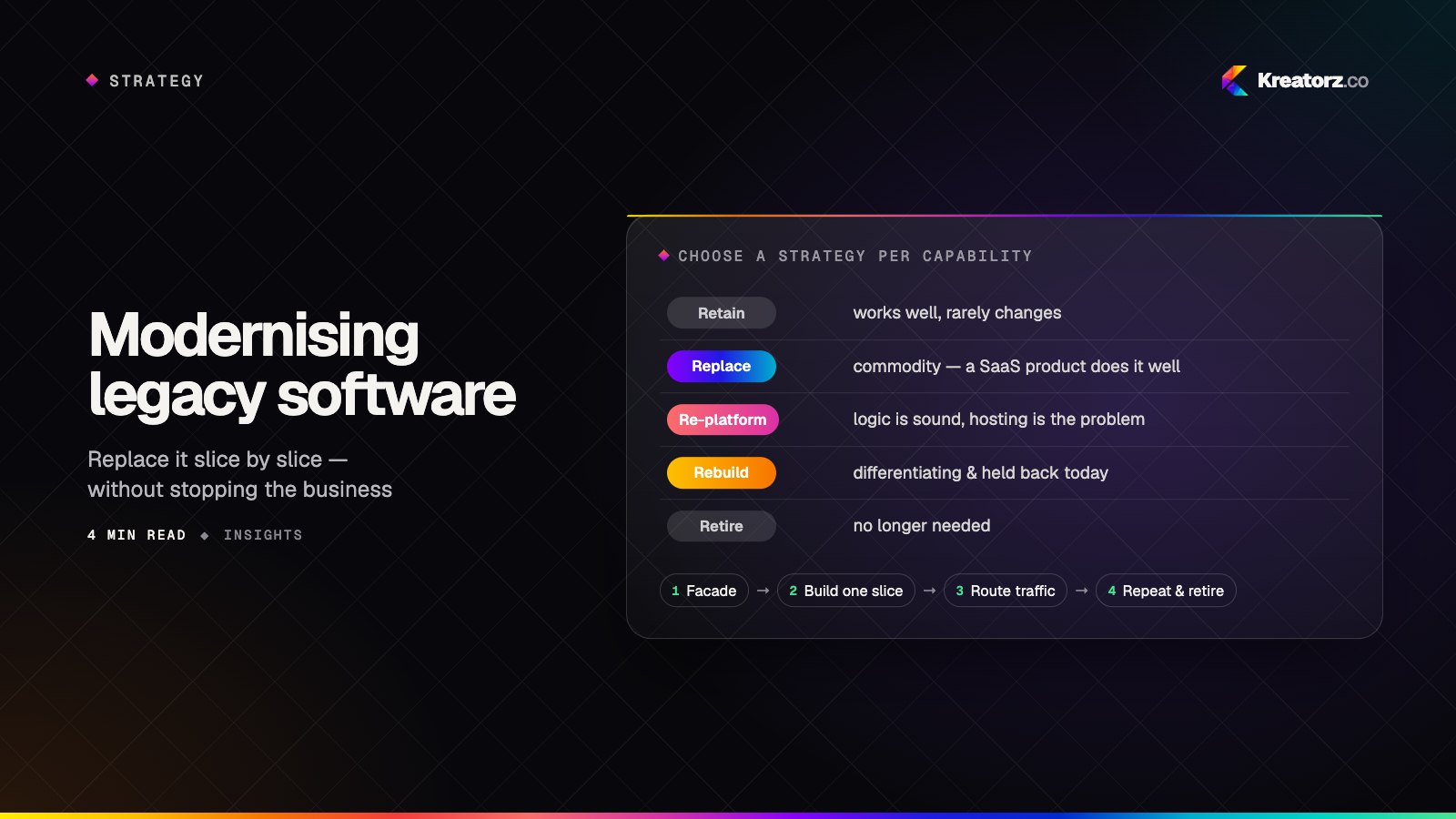
Legacy PHP, a monolith built on an outdated framework, or a front end nobody wants to touch. We stabilise, add tests, then replace pieces behind clear interfaces while the business keeps running. Our guide to modernising legacy software explains the approach.
AI features across the stack
Search over your own documents, assistants inside your product, document processing and automation — wired through your backend with proper permissions and logging. Learn more about AI app development.
Choosing a stack for your web application
We work across several proven stacks. Each is a good choice in the right context:
| React / Next.js + Node.js | React / Next.js + Python | Laravel (with Inertia, Livewire or an SPA) | MERN (MongoDB, Express, React, Node.js) | |
|---|---|---|---|---|
| Language | TypeScript end to end | TypeScript and Python | PHP, plus JavaScript for the UI | JavaScript or TypeScript end to end |
| Strengths | Shared types, real-time features, one language | Data, AI and ML workloads, scientific libraries | Batteries included, fast CRUD and admin tooling | Flexible documents, quick iteration |
| Good fit for | SaaS, dashboards, real-time apps | AI products, analytics, data-heavy platforms | Portals, e-commerce, business systems | Content-led apps with evolving data shapes |
| Watch out for | Discipline needed in a loosely structured ecosystem | Two languages to maintain | Fewer specialists in some regions | Relational data that outgrows documents |
MERN stack development remains popular, and we build with it when the data genuinely suits a document store. When your data is relational — orders, invoices, bookings — we usually recommend PostgreSQL alongside Node.js instead.
How we deliver custom web applications
- Discovery. We map users, workflows, integrations and risks, and agree what the first release must prove.
- Architecture. A written outline of the data model, service boundaries, hosting and security approach, reviewed with you before build starts.
- Design. User flows, wireframes and a component-based interface system that developers can implement directly.
- Vertical slices. Each sprint delivers complete features — screen, API, database and tests — rather than finishing the front end and back end separately.
- Continuous delivery. Every change goes through code review and automated tests, and lands in a preview environment you can click through.
- Launch. Production hardening, monitoring, alerting, backups and a rollback plan.
- Run and improve. Performance tuning, dependency upgrades and a steady roadmap of features after go-live.
What we build
- Service operations platforms that connect customers and businesses — scheduling, history, status updates and communication. Our work on Integrity 1st Automotive, which connects car owners and repair shops, is one example.
- Catalogue and booking platforms that combine browsing, appointments and follow-up reminders, like the platform we built for Rose Optometry.
- SaaS products with tenants, plans, billing and usage dashboards — such as Ryvato, a strategic project management platform with OKR management, KPI reporting, Gantt scheduling, budget and earned value analytics, and project health scores with risk alerts.
- Rental and property platforms with search, viewing requests, online applications, broker portals and digital contracts, like Rentech in Saudi Arabia, which includes Ejar integration.
- Internal tools that replace spreadsheets with role-based workflows and audit trails.
- Marketplaces with listings, search, messaging and payments.
- Web companions to mobile apps — admin consoles and customer portals sharing the same backend as your mobile app.
Why Kreatorz for full stack development
- Whole-system accountability. One team answers for performance, security and uptime, so problems are fixed rather than passed between vendors.
- Several stacks, no dogma. React, Next.js, Node.js, Python and Laravel are all in daily use, so our recommendation follows your needs.
- AI-native engineering. We were recognised with the Global AI Impact Award at the Global Image Awards Middle East in Riyadh, 2026, and we add AI where it earns its place.
- You own everything. Repositories, cloud accounts, domains and designs belong to you from day one.
- Transparent working. Weekly demos, a shared backlog and direct access to the people writing the code.
- Worldwide reach. Offices in the United States, Canada and Pakistan let us work across time zones.
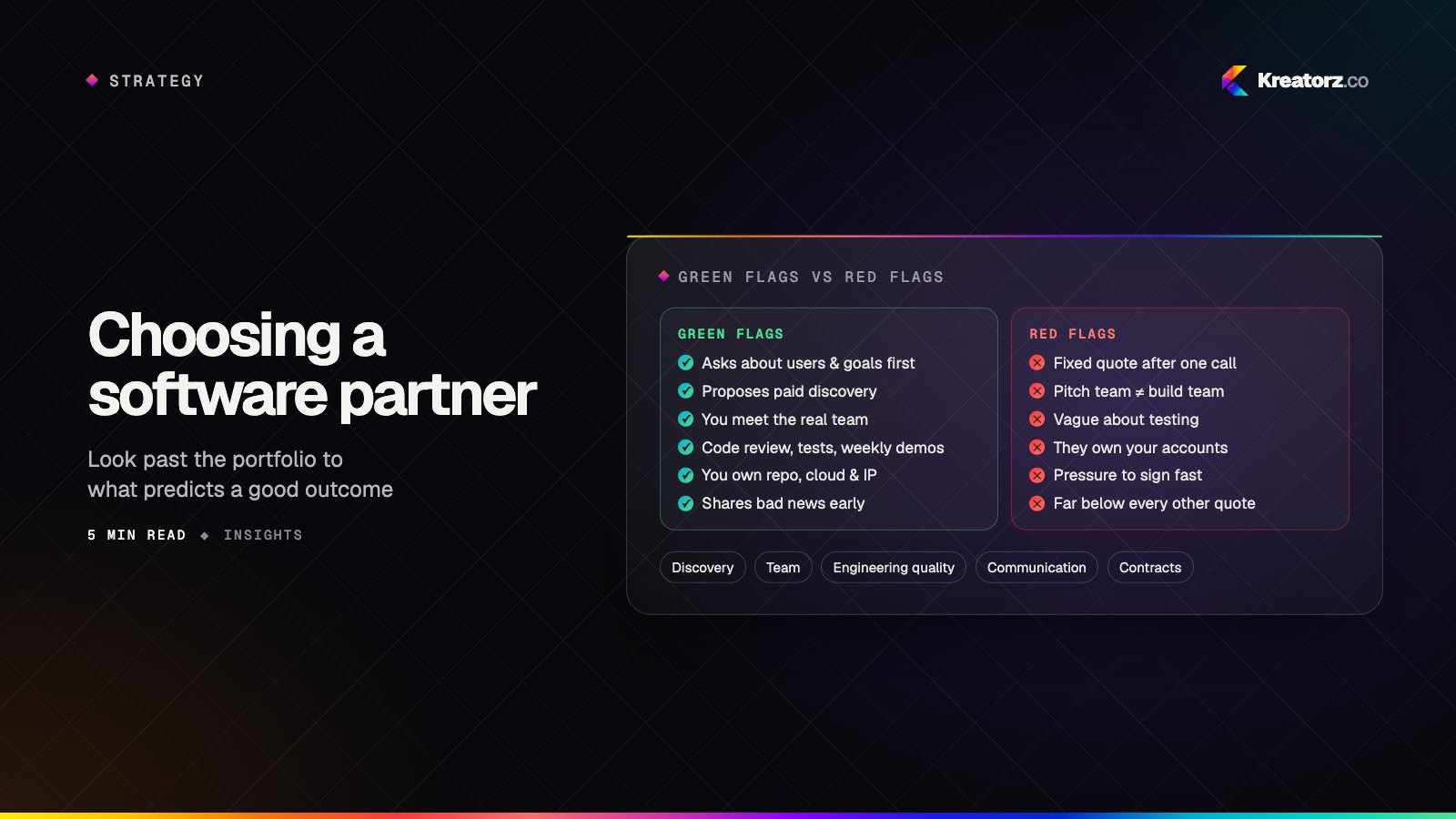
If you are comparing vendors, our guide to choosing a software development partner lists the questions worth asking — including of us. When you are ready, start a conversation.