Node.js is at its best when a backend spends most of its time waiting — on databases, third-party APIs, message queues and thousands of open connections — rather than crunching numbers. Kreatorz is a Node.js development company that builds exactly those systems: APIs for web and mobile apps, chat and live-update services, integration layers and event-driven workflows, written in TypeScript and deployed with care.
Because the same language runs in the browser, a Node.js backend lets you share types and validation between server and client. That makes it a natural partner for front ends built by our React development team and for mobile apps that need a fast, predictable API.
When Node.js is the right backend — and when it is not
We recommend Node.js when your product is:
- I/O-heavy — many concurrent requests that mostly read and write data or call other services.
- Real-time — chat, presence, notifications, live dashboards or collaborative editing.
- API-first — serving several clients (web, iOS, Android, partners) from one contract.
- Integration-driven — stitching together payment providers, CRMs, messaging services and AI models.
- TypeScript-led — where one language across the stack simplifies hiring and code sharing.
We look elsewhere when the core workload is heavy computation, data science or machine learning, where Python development has the stronger ecosystem, or when an admin-heavy business system would benefit from the conventions of Laravel. Mixed architectures are common: a Node.js API in front, with Python services behind it for AI or data work.
Node.js development services
Backend API development
REST and GraphQL APIs with clear contracts, versioning, pagination, rate limiting and consistent error handling. We generate OpenAPI or GraphQL schemas from code, so documentation and client SDKs stay in step with the implementation.
Real-time applications
WebSocket and Socket.IO services for messaging, typing indicators, live status and notifications, backed by Redis for pub/sub and horizontal scaling. We design for reconnects, message ordering and delivery guarantees from the outset, because that is where real-time features usually break.
Microservices and event-driven systems
Service boundaries drawn around business capabilities, communicating through queues and events rather than chains of synchronous calls. Background work — emails, file processing, scheduled jobs — runs on durable job queues with retries and dead-letter handling.
Serverless Node.js
Functions on AWS Lambda behind API Gateway, triggered by queues, storage events or schedules. Serverless suits spiky or low-baseline traffic; we pair it with our AWS development practice for infrastructure as code, observability and cost control.
AI orchestration layers
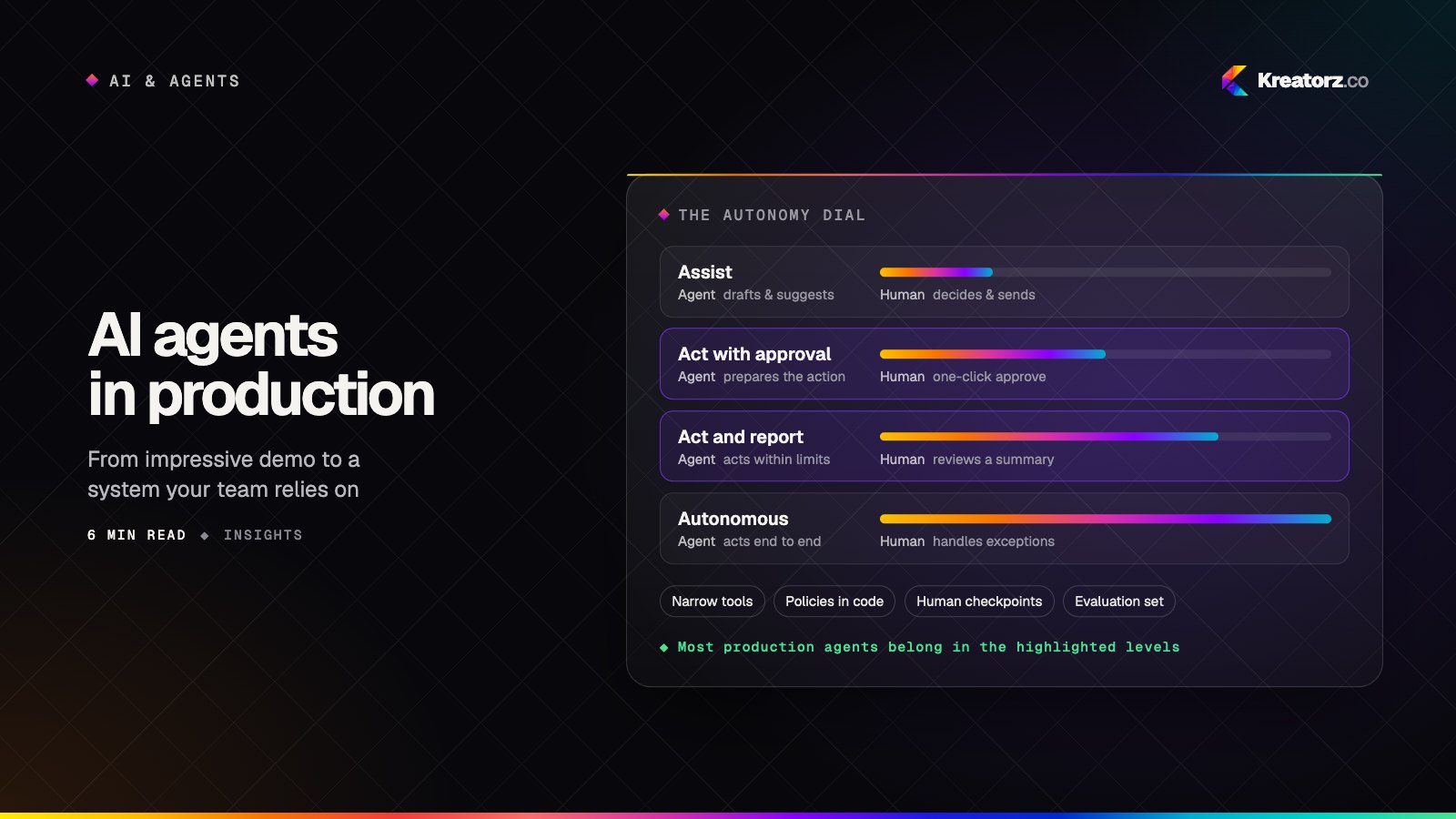
Node.js services that call language models, manage tool use, stream responses to the client and enforce permissions and audit logging. Our AI agent development team and the article on AI agents in production explain how we keep these systems reliable.
Choosing a Node.js framework
| Express | NestJS | Fastify | Serverless functions | |
|---|---|---|---|---|
| Style | Minimal, unopinionated | Structured modules, dependency injection | Minimal, performance-focused | One function per route or event |
| Best for | Small services, simple APIs | Larger teams and long-lived codebases | High-throughput APIs | Spiky traffic, event handlers |
| Learning curve | Low | Moderate | Low to moderate | Low per function, higher for the whole system |
| Watch out for | Structure drifts without conventions | More ceremony for small services | Smaller plugin ecosystem than Express | Cold starts, local testing, distributed debugging |
For most new products with more than a handful of endpoints, we favour NestJS or a well-structured Fastify setup in TypeScript. Express remains a fine choice for small services and for extending existing codebases.
How we build and scale Node.js systems
- Domain and contract first. We model the core entities and write the API contract before implementation, so front-end and mobile work can start in parallel.
- Typed foundations. Strict TypeScript, runtime validation of every input, and a consistent structure for modules, errors and configuration.
- Data design. Relational schemas in PostgreSQL by default, Redis for caching and ephemeral state, and migrations under version control.
- Automated testing. Unit tests for business logic, integration tests against real databases in containers, and contract tests for public APIs.
- Observability. Structured logs, metrics and tracing across services, with alerts tied to user-facing symptoms rather than raw CPU graphs.
- Load and failure testing. We test realistic traffic patterns and dependency failures before launch, not after the first incident.
- Scale deliberately. Stateless services behind a load balancer, connection pooling, caching, queues for slow work and autoscaling rules based on measured behaviour.
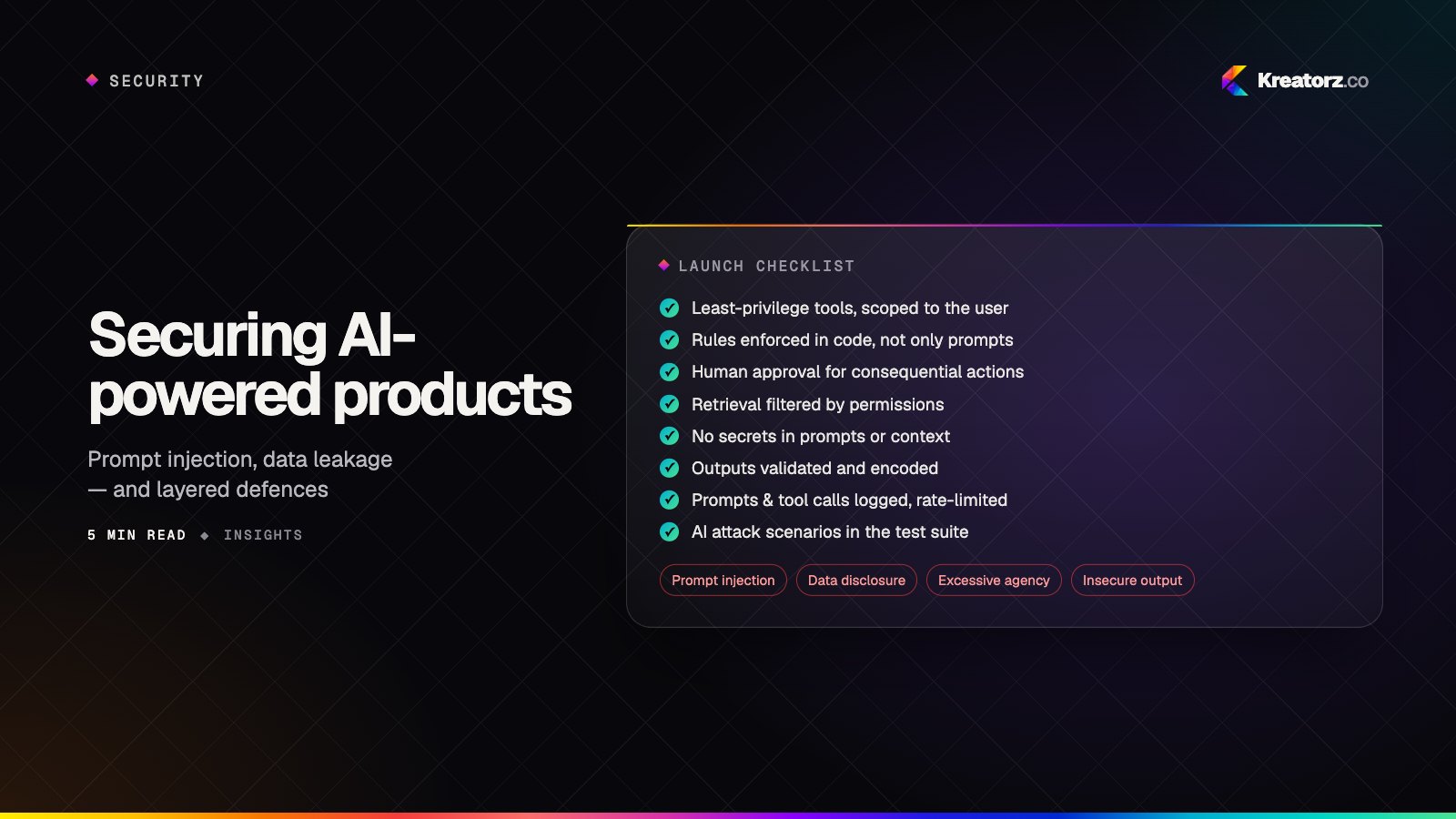
Security runs through every step: authentication and authorisation on each route, secrets kept out of code, dependency scanning in CI and least-privilege cloud access. Our post on securing AI products covers the extra controls needed when language models are involved.
What we build with Node.js
- On-demand ordering and delivery services with live order tracking, wallets and rider messaging — the kind of product we built in YaFi, a food, grocery and pharmacy delivery app.
- Payments and tipping services with QR code tipping, secure digital payments, real-time tip tracking and team tip management, like Easy Tipping.
- Messaging and matching backends for social and dating products — see dating app development.
- Scheduling and communication services connecting customers and businesses, similar in shape to the operations platform we built for Integrity 1st Automotive.
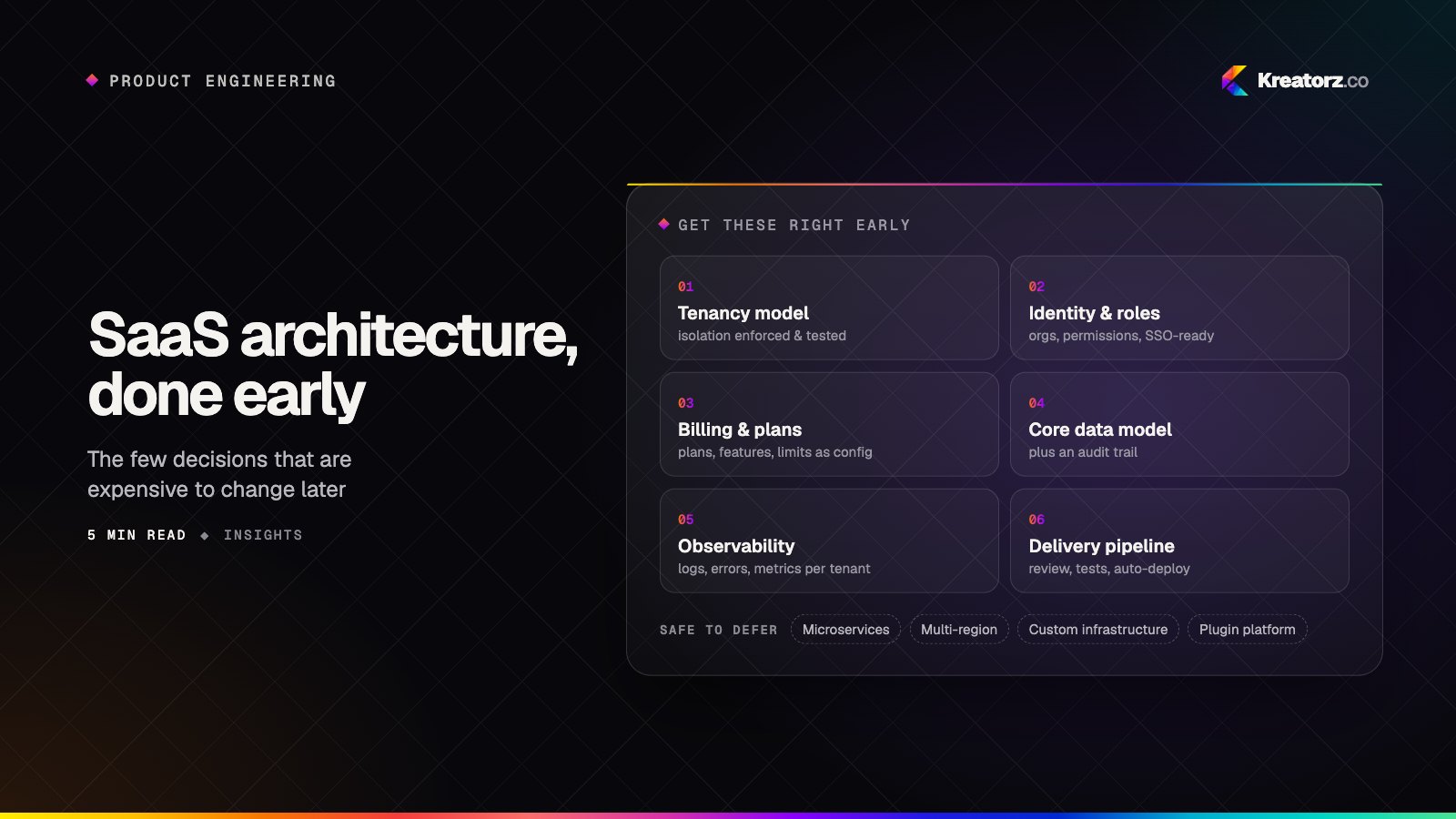
- Multi-tenant SaaS APIs with plans, roles, usage metering and webhooks.
- Backend-for-frontend layers that tailor responses for web and mobile clients.
- Integration hubs that sync data between payment, CRM, accounting and messaging providers.
- Real-time dashboards streaming operational data to teams as it happens.
Why Kreatorz for Node.js development
- Engineering judgement. We tell you when Node.js is the wrong tool and design mixed architectures where they make sense.
- End-to-end ownership. API, database, cloud and front end built by one team — see our full stack development approach.
- AI-native. Recognised with the Global AI Impact Award at the Global Image Awards Middle East, Riyadh 2026, we build AI orchestration into backends responsibly.
- Operational focus. Logging, monitoring, alerting and runbooks are part of the deliverable, not an afterthought.
- Your code, your accounts. Repositories and cloud accounts are owned by you from day one, and progress is visible through weekly demos and a shared backlog.
- Worldwide delivery. Offices in the United States, Canada and Pakistan.
Planning a new API or struggling with an existing one? Talk to us.