Your front end is the part of your software that customers actually judge. If it is slow, inconsistent or hard to change, every other investment underneath it is undervalued. Kreatorz is a React development company that treats the interface as a product in its own right: measured for speed, structured for reuse and written in TypeScript so it stays dependable as the team and feature list grow.
We build with React for interactive applications and with Next.js when search visibility, first-load speed or content matter. Both sit naturally on top of the APIs we build in Node.js, Python or Laravel, or on the backend you already have.
Why teams choose a React development company
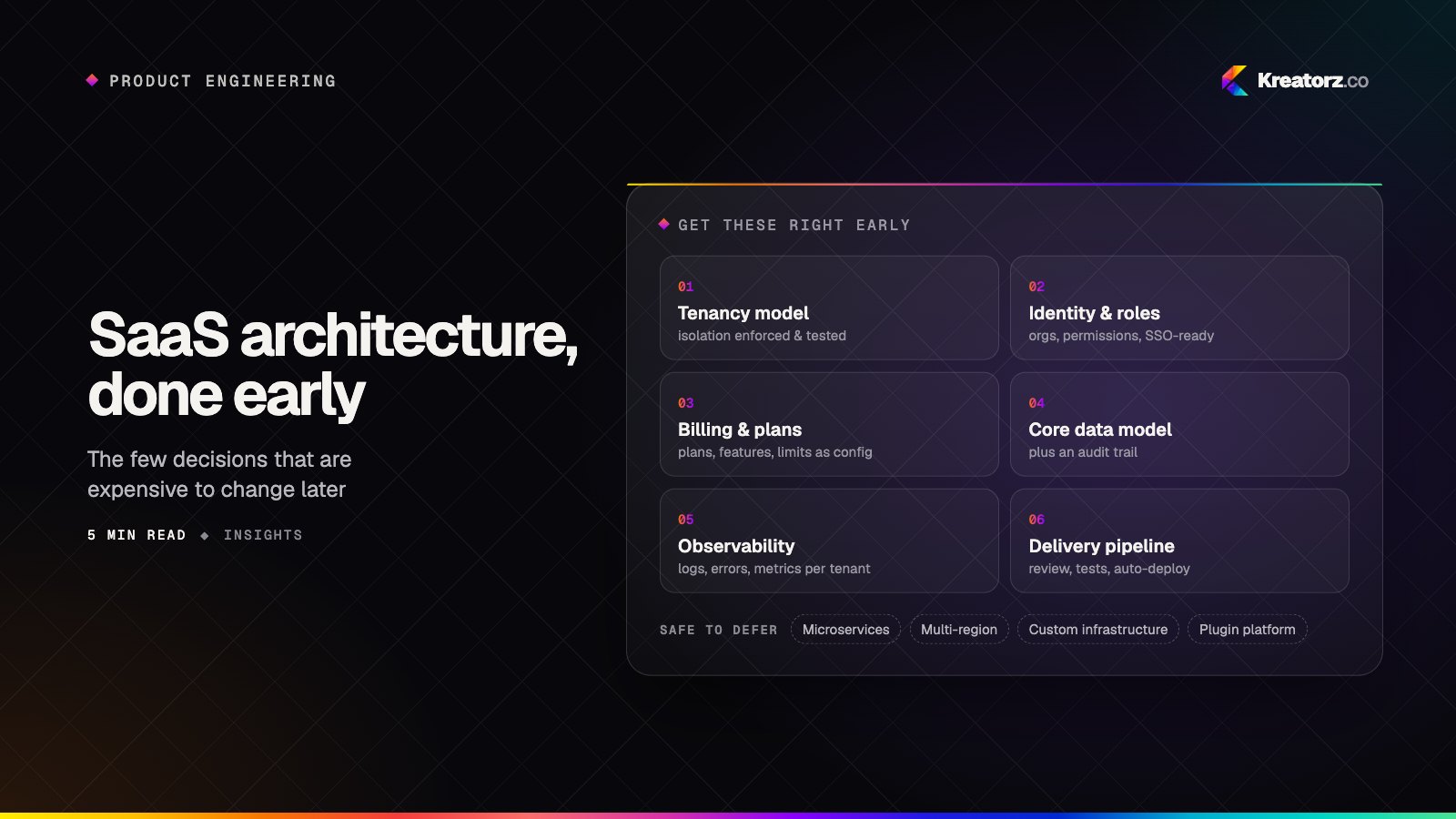
Hiring individual React developers solves a capacity problem. A team solves the structural ones — decisions that are expensive to undo:
- Rendering strategy. Which pages are rendered on the server, which are static and which run in the browser.
- State and data fetching. Where data lives, how it is cached and how the interface stays in sync with the server.
- Component architecture. A design system that lets new screens be assembled rather than reinvented.
- Quality gates. Type checking, linting, unit tests, visual regression and end-to-end tests in the pipeline.
- Performance budgets. Agreed limits on bundle size and loading metrics that are checked automatically.
Get these right early and a React codebase can be worked on by many people for years. Get them wrong and every feature gets slower to ship.
React.js development services
React web app development
Single-page applications, customer portals, booking flows and internal tools built with React, TypeScript and a modern build setup. We pair a server-state library such as TanStack Query with lightweight client state, so data stays fresh without a tangle of global stores.
Next.js development
As a Next.js development company we use the App Router, server components, streaming and route-level caching where they help — and keep things simple where they do not. Marketing pages, documentation, catalogues and logged-in product areas can live in one codebase.
Dashboards and data-heavy interfaces
Tables with thousands of rows, filters, charts, exports and role-based views. We virtualise long lists, move heavy work off the main thread and design empty, loading and error states as carefully as the happy path.
Design systems and component libraries
Tokens, accessible components, documentation in Storybook and versioned packages that several products can share. Designers and developers work from the same source of truth.
AI interfaces in React
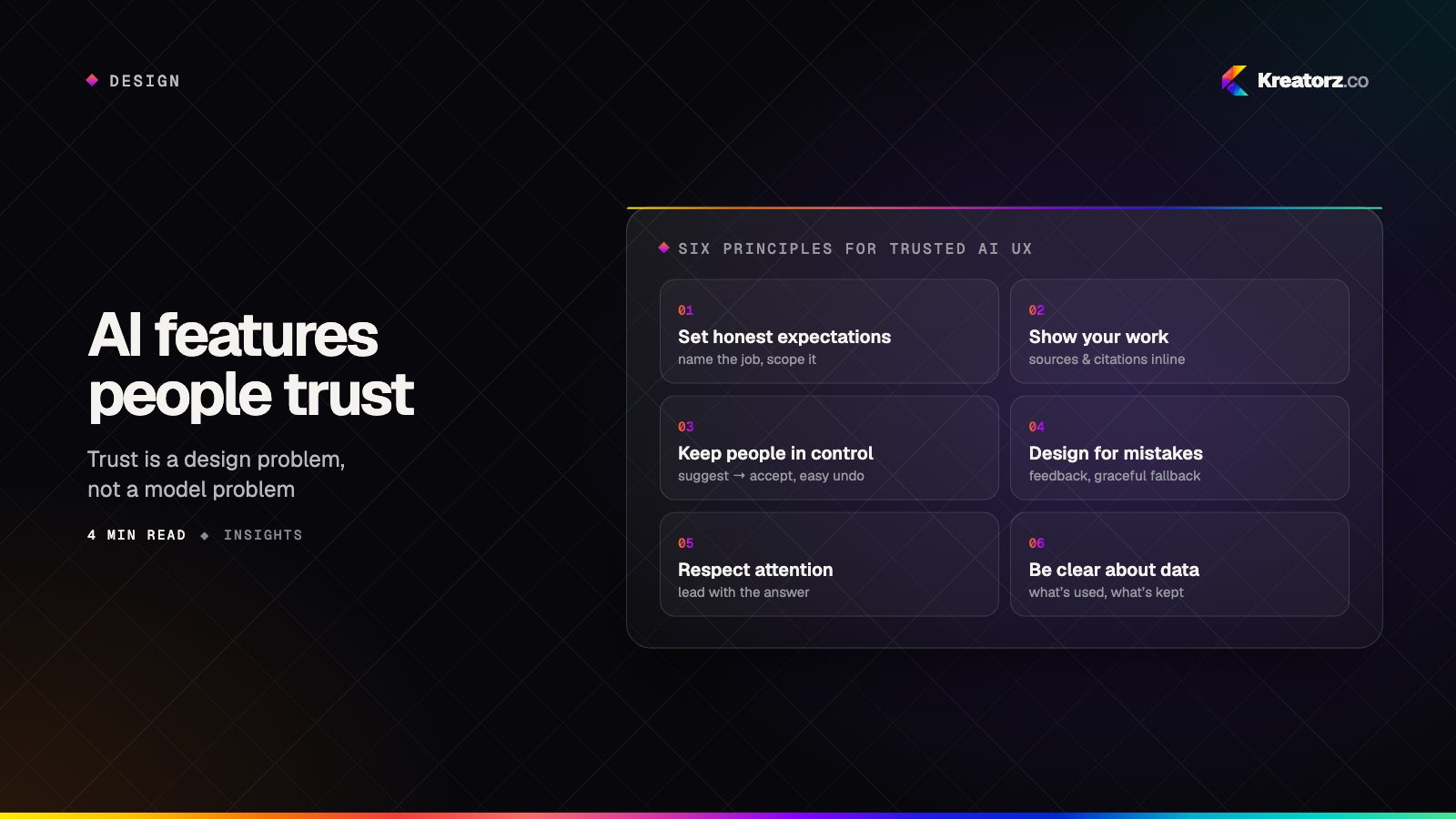
Streaming chat, inline suggestions, document review screens and agent activity views. Building interfaces people trust is its own discipline — our article on designing AI features people trust covers the patterns, and our AI app development team handles the models behind them.
Next.js rendering strategies compared
Choosing how each page is rendered is the single biggest lever on both SEO and speed:
| Strategy | How it works | Best for | Trade-off |
|---|---|---|---|
| Static generation | HTML built ahead of time and served from a CDN | Marketing pages, docs, blog posts | Content changes need a rebuild or revalidation |
| Incremental revalidation | Static pages refreshed in the background on a schedule or trigger | Catalogues, listings, pricing pages | Short window where content may be slightly stale |
| Server rendering | HTML generated per request on the server | Personalised or fast-changing pages that must be indexed | Server cost and latency on every request |
| Client rendering | Browser fetches data and renders after load | Logged-in dashboards and tools | Weak for SEO, slower first paint |
Most real products mix all four. A public product catalogue might be statically generated and revalidated, while the account area behind login renders on the client.
Performance and Core Web Vitals
Google measures real-user loading, responsiveness and visual stability, and so do your customers. Our performance work typically covers:
- Largest Contentful Paint — server or static rendering for above-the-fold content, optimised images and fonts, and fewer blocking scripts.
- Interaction to Next Paint — splitting long tasks, deferring non-essential JavaScript and avoiding unnecessary re-renders.
- Cumulative Layout Shift — reserved space for media, ads and late-loading components.
- Bundle discipline — route-level code splitting, tree-shaken dependencies and automated bundle-size checks in CI.
We measure with field data where it exists and lab tools where it does not, against an agreed baseline.
Migrating legacy front ends to React
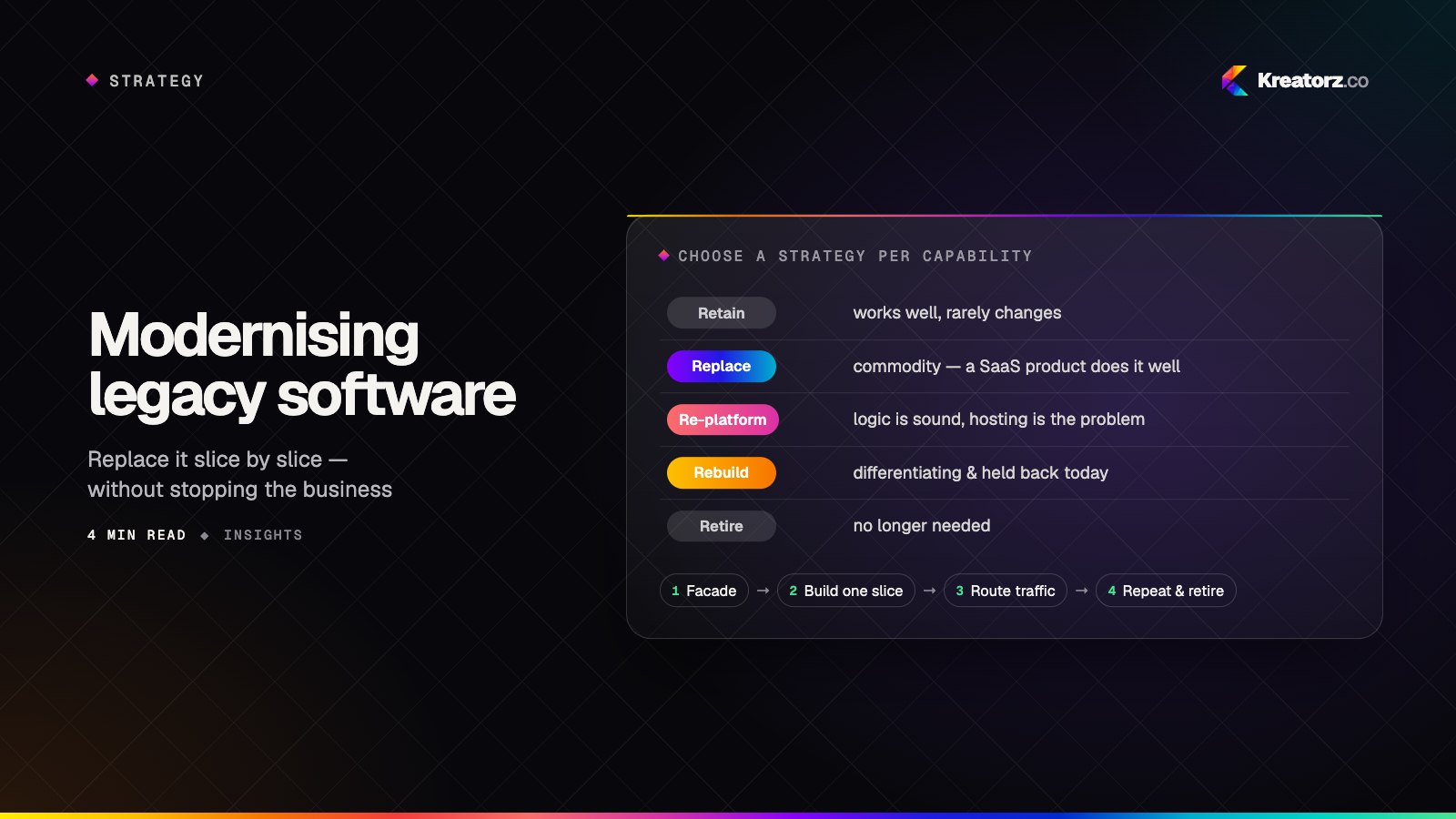
jQuery-heavy pages, AngularJS apps, server-rendered templates with scripts bolted on — these still run a great deal of business software. A full rewrite is rarely the safest move. We usually:
- Audit the existing front end, its dependencies and the user journeys that matter most.
- Set up the foundation — TypeScript, a component library, testing and a build pipeline that can coexist with the old code.
- Migrate route by route, embedding React into existing pages or placing new routes behind the same domain.
- Retire old code once each area is covered by tests and traffic has moved.
- Harden with performance budgets, accessibility checks and monitoring.
The wider strategy is covered in our guide to modernising legacy software.
What we build with React and Next.js
- Customer-facing platforms that combine browsing, booking and reminders — the kind of product we delivered for Rose Optometry.
- SaaS front ends with onboarding, billing screens, settings and admin consoles; see SaaS development.
- Operational dashboards for teams who live in tables, filters and reports — like Ryvato, a project management product with KPI tracking and reporting, Gantt charts, earned value analytics and project health scores.
- Content-led sites where search rankings and page speed drive revenue, such as the web presence for personal injury law firm Foster Wallace, with legal FAQs and resources, service pages and free consultation and case evaluation requests.
- Web versions of mobile products, sharing logic and types with a React Native app where that makes sense.
- Fast MVPs that validate an idea without cutting the corners that matter; see MVP development.
Why Kreatorz for React development
- Full stack context. Our React developers work alongside the people building your APIs and infrastructure, so front-end decisions account for the whole system — see full stack development.
- TypeScript by default. Typed props, typed API clients and strict settings catch whole classes of bugs before release.
- Design and engineering together. Designers and front-end engineers share one component system, which keeps the interface consistent.
- AI-native. Recognised with the Global AI Impact Award (Global Image Awards Middle East, Riyadh 2026), we build AI features into interfaces with care.
- Openness. Weekly demos, a shared backlog, and code, designs and accounts owned by you from day one.
- Worldwide. Teams in the United States, Canada and Pakistan collaborate across time zones.
Ready to talk about your front end? Contact us.